


Press Release
The Petrol Station Nobody Put in the GDP Report
By Lincoln Mali

I sat at a garage on Spondo Street, in Zwide, Gqeberha, for forty minutes without buying a single litre of fuel, and left having watched more real economic activity than most business parks generate in a week.
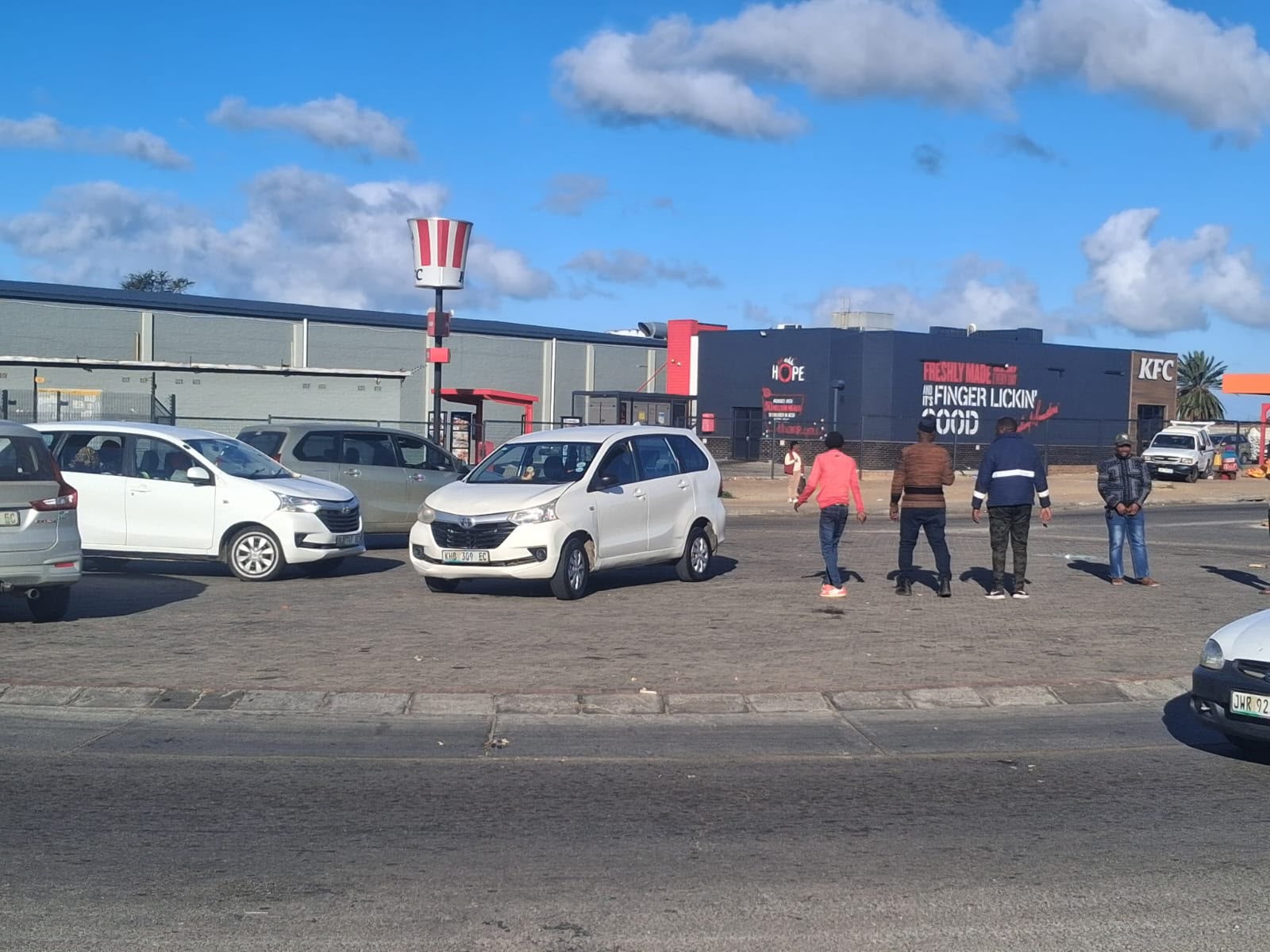
It was a Friday afternoon, nothing staged for a photographer. Just the corner going about its business at full volume. The site itself is an Astron Energy forecourt, run by Thapelo Headbush: a brand-standard operation, price board and all, but with roots that go three generations deep into township business. It sits on a stretch of road plenty of outside investors would still write off as too small, too informal, too township to bother with. But look at what's clustered around his fence line. Hooters sound as taxis nose in and out of the queue. On one side, sharing the same wall as the garage, Zwide Hardware and Zwide Sand & Grit trade under the same hand-painted signage. A loaded tipper truck idles at the kerb, its driver leaning out the window to shout a price at someone crossing the road. Sand and grit are stacked for anyone laying a foundation or patching a wall.
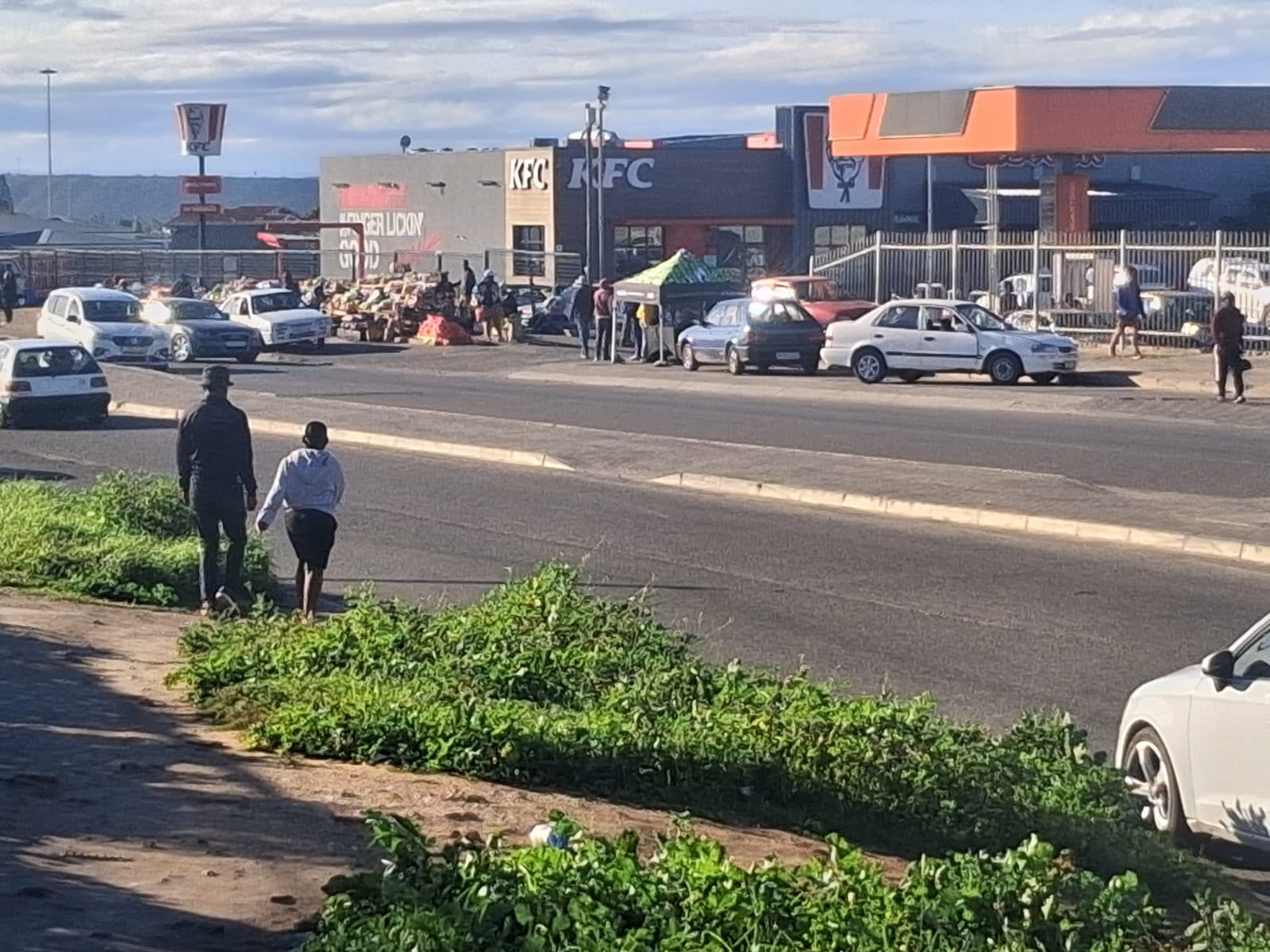
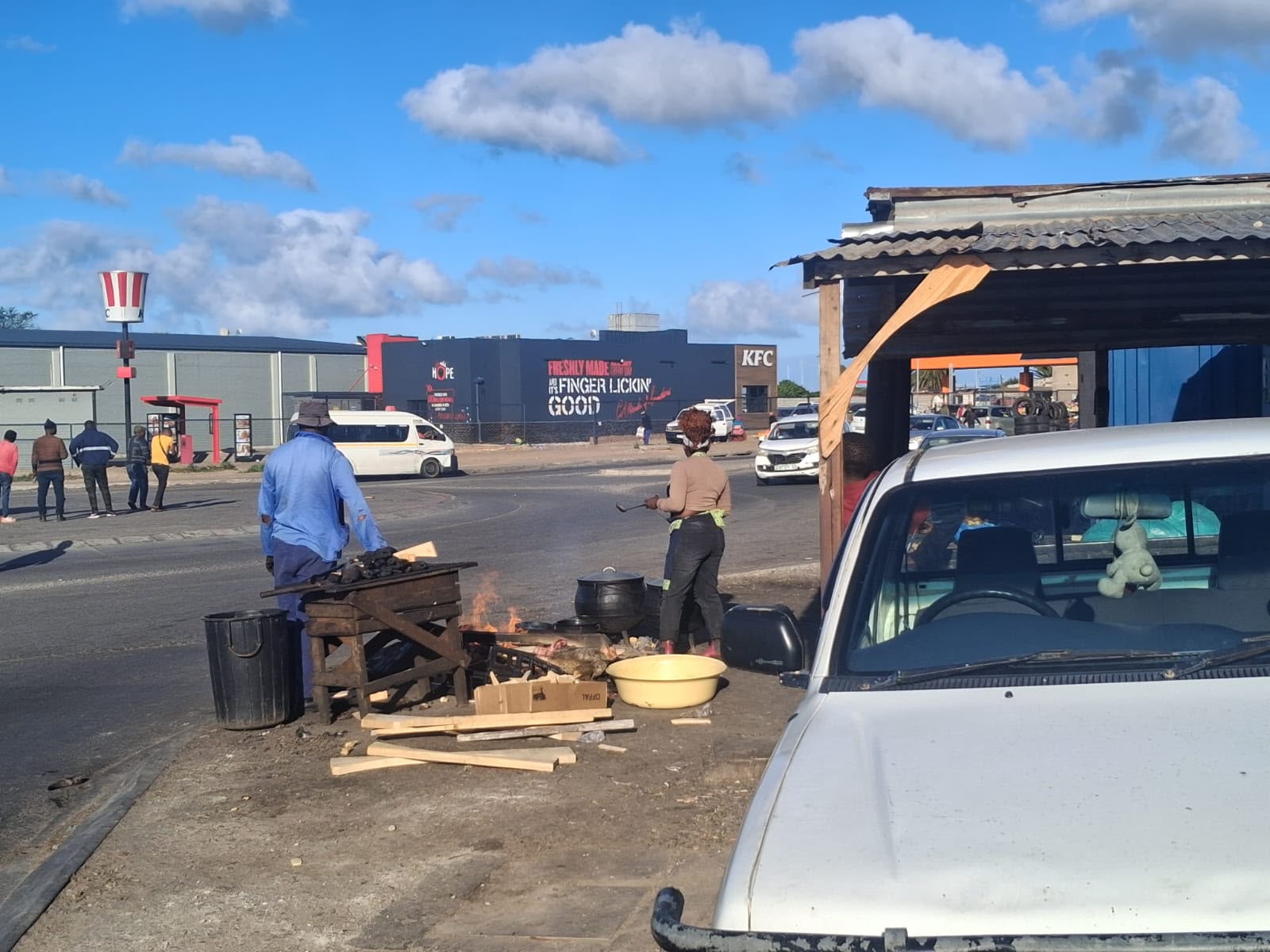
A car wash runs behind the station, hoses hissing over bakkie tyres, while Boxer and Boxer Liquors anchor the other end of the block, their signage lit up long after the small traders around them have packed up for the night. A KFC sits directly next door, its "Freshly Made, Finger Lickin' Good" mural sharing wall space with an Add Hope campaign message about the meals it has helped fund. Across the road, informal traders sell mielies, whole chickens, and sheep heads off the same stretch of pavement where a woman known locally simply as Tshidi grills meat to order, crates spilling onto the pavement, a queue already forming before midday. An MTN billboard looms over the intersection, advertising airtime deals to everyone idling at the pumps, and a Nedbank ATM glows green in the dark for anyone who needs cash before they buy. Just off the forecourt, a man tends a coal fire under a lean-to roof of corrugated iron, turning meat on an open grate while a woman stirs a pot beside him, smoke drifting across the parking bays. It's a walk-up braai stand doing brisk business in the time it takes a taxi to fill its tank. A soft toy dangles from a rearview mirror in a bakkie idling nearby, its driver leaning against the door, chatting to a friend while he waits his turn at the pump.
A taxi pulls in. The driver settles the day's takings with his gaartjie, counting notes against his knee. A mechanic quotes a customer on a starter motor, bonnet up, in the shadow of the price board. A knot of men stand at the edge of the forecourt, deep in a conversation that has nothing to do with fuel. Someone collects a stokvel contribution on their phone between pumps. None of that is on a till slip. It's worth noting that the majority of forecourt transactions in townships, rural areas and transport corridors are still cash-based, which is exactly why a corner like this one runs on relationships as much as receipts. All of it is the economy, moving at the pace of a busy afternoon. One transaction after another. None of them waiting for permission.
We tend to talk about the township economy in trillions. R900 billion here, a million informal businesses there. Big, satisfying numbers. But numbers like that can flatten the very thing that makes a corner like Spondo Street remarkable: it doesn't sit in neat categories. It clusters. It stacks. And nowhere is that clustering more visible than at the local petrol station.
This is the part outsiders miss when they talk about townships as places that only consume. The petrol station isn't a leak point where money leaves the community for a corporate fuel brand. It's a node, a place where formal infrastructure (the brand, the pumps, the compliance) sits shoulder to shoulder with informal enterprise, and where value keeps circulating locally instead of driving straight out the gate. The industry numbers back this up: forecourt retail sales topped R40 billion in 2025, growing 4% even as fuel volumes themselves declined 6.3%. Value is shifting from the pump to everything clustered around it, and nowhere is that shift more visible than at a site like this. Spondo Street is one of roughly 6,000 forecourts nationally, and independents like it make up close to 30% of that network, the part of the industry least captured by head-office statistics and most embedded in the community around it.
Running a filling station in a township takes the same fundamentals as any capital-intensive business: compliance with fuel-brand and municipal requirements, security, working capital to carry stock, staff you can trust with cash. But it also takes something a suburban site owner doesn't need as much: deep community credibility built up over years, so that the traders and vendors around your forecourt see you as one of their own rather than a landlord to be avoided. Thapelo Headbush has that credibility in spades, and he didn't build it overnight.
The family's presence in township business goes back to 1940, when James and Peggy Headbush arrived in New Brighton from Bloemfontein. Peggy sold meat off a table on the street corner before the family built that trade into a proper shop, then a shebeen, and eventually a funeral business that still runs today. Thapelo, part of that same family line, has carried the ethos into the fuel business and into the community more broadly. It was Thapelo who, after watching pupils walk past his forecourt shivering on cold mornings, arranged a R10,000 donation for new jerseys for Isaac Booi Primary School in Zwide, the kind of quiet, local involvement that's become something of a pattern for him. The petrol station is simply the family's business philosophy applied to a new generation and a new trade: don't chase a quick buck, be part of the corner rather than a landlord over it.
And this matters for how we think about investment in these spaces. Roughly 800,000 to a million businesses operate in South Africa's townships today, the overwhelming majority of them survivalist in scale: a spaza shop run out of a front room, a hairdresser working under a gazebo, a mechanic with nothing but a toolbox and a patch of pavement. Around three million people earn a living inside this informal economy. When we ask how to grow it, we usually reach for funding schemes and formal-sector partnerships, which are necessary. But we should also be asking a simpler, more physical question: where do people already gather, and how do we build around that instead of against it?
Spondo Street already answers that question. It has foot traffic, safety in numbers, lighting, ablution facilities, and a captive audience with a few spare minutes. That's exactly the infrastructure an informal vendor or a young mechanic needs and struggles to access anywhere else. Instead of treating the forecourt hustle as clutter to be tidied away, fuel brands, municipalities and property owners could treat it as an asset: formalising trading bays, offering fair rental terms to the traders and vendors already there, and building the digital payment rails that let a sand-and-grit supplier or a braai stand accept a QR payment as easily as the till inside.
That's the opportunity I keep coming back to in this series: townships are not short of economic activity. They are short of infrastructure and capital that recognises the economic activity already happening in front of us. Spondo Street is proof of concept, running quietly in Zwide the same way it runs in every township in the country, asking nobody's permission and waiting on nobody's approval.
Next time you pull in to fill up, don't just look past the pump. Look at who's standing around it. The hardware trader, the sand supplier, the car wash guy, Tshidi at her grill, the mechanic with his bonnet up, Thapelo behind the till: that's not the informal economy waiting to be formalised. That's the economy, working exactly as it was built to, seven days a week, needing no pitch deck to justify its existence. The only real question left is whether the rest of us are going to keep measuring it by what it isn't, or start building around what it already is.